How many carbs before lifting: the short answer
Fifteen grams.
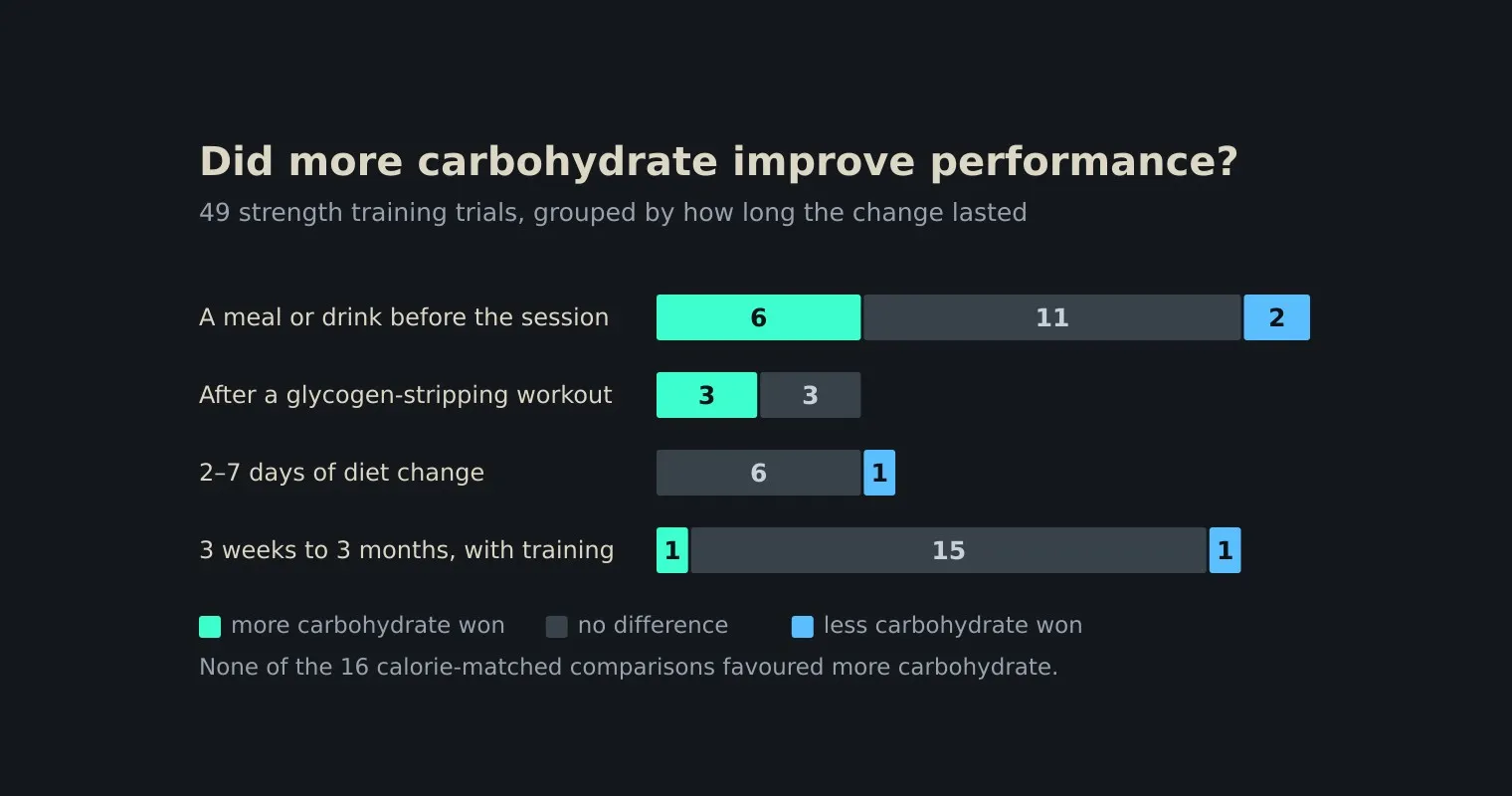
A 2022 systematic review in Nutrients collected every trial it could find that gave people different amounts of carbohydrate and then measured strength, reps or power. Forty-nine studies came back. Thirty-nine of them found no benefit from eating more carbohydrate — including every one of the 16 comparisons that held calories equal.
So the answer the authors land on for how many carbs before lifting is a floor, not a target: at least 15 g of carbohydrate and 0.3 g of protein per kilogram of bodyweight within three hours of training. For an 80 kg lifter, 0.3 × 80 is 24 g of protein. They ask for more in two specific situations, and both are about the size of the session rather than the size of your diet.
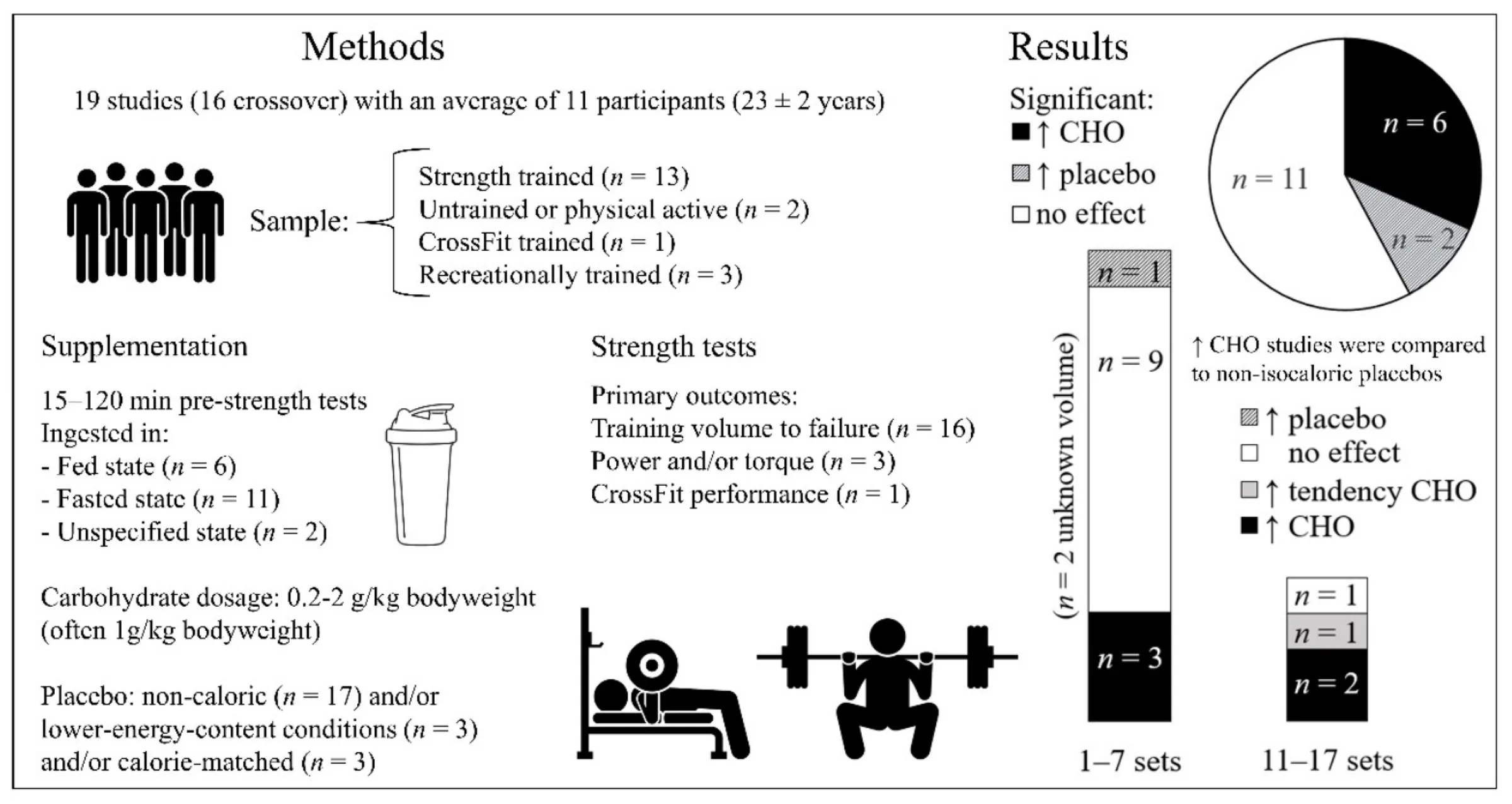
Figure 2 from Henselmans and colleagues (2022), reproduced under CC BY 4.0. The pie is all 19 acute trials; the two bars split them by how many sets per muscle group the test workout contained.
Table of Contents
- How many carbs before lifting: the short answer
- What this review pulled together
- Why more carbohydrate kept not mattering
- How many carbs before lifting: the number, and when to raise it
- Low-carb diets over weeks and months
- What this review does not settle
- Where this sits in the wider evidence
- What to do with this in your training
- Common Questions About Carbs and Lifting
- How Pick It Up Helps
- Further Reading & References
What this review pulled together
Henselmans and colleagues searched MEDLINE, SPORTDiscus and SciELO to January 2022 for trials that manipulated carbohydrate intake and measured resistance training performance — one-rep max, reps to failure, total training volume, or power. Forty-nine studies qualified, sorted by how long the carbohydrate change lasted:
- 19 acute trials. A drink or a meal in the hours before a strength test.
- 6 depletion trials. A cycling or high-volume session first to strip muscle glycogen, then carbohydrate, then the strength test.
- 7 short-term trials. Two to seven days of a higher- or lower-carb diet.
- 17 long-term trials. Three weeks to three months of a diet, alongside training.
Strength trainees and athletes were the participants in all but ten of the studies, which is well aimed for a nutrition question: six studies used recreationally active people and four used untrained people. Group average ages ran from about 23 to 29.
Ten studies did find that more carbohydrate improved performance. Not one of them matched calories between the conditions.
Why more carbohydrate kept not mattering
A hard set feels like it is burning sugar, and it is. The question is whether a session burns enough of it to run the tank low.
The authors put the ceiling at 41% — the largest whole-muscle glycogen depletion reported after resistance training in the literature they searched, or 39% leaving aside machine-based isokinetic work. Glycogen only starts interfering with how a muscle contracts once it drops to roughly 250–300 mmol/kg of dry muscle, which generally takes a fall of more than 40% from where you started. A session lands just under the line.
Two things keep it there. Eccentric contractions — lowering the weight — cost very little energy next to lifting it. And the gaps between sets let the aerobic system, which runs on fat as happily as on sugar, supply somewhere between 20% and 70% of the session’s total energy — one more thing riding on how long you rest between sets.
The other explanation is less flattering to the carbohydrate. In one trial a high-carb breakfast produced more squat reps to failure than drinking water — no change in bench press — and a flavour- and texture-matched sham breakfast of 29 calories produced just as many squat reps, and blunted hunger just as well. With extra calories riding along in every trial that found a benefit, there is no way to separate the carbohydrate from the food.
There was no dose–response in either direction. Significant effects turned up at 0.27 g/kg and went missing at 2 g/kg. In one trial comparing 15, 30 and 60 g of carbohydrate per hour against a placebo, the 15 g/h group beat the 60 g/h group on bench press reps.
How many carbs before lifting: the number, and when to raise it
The floor is 15 g of carbohydrate plus 0.3 g/kg of protein within three hours of the session. The authors are explicit that this comes from inconclusive evidence with room for benefit and no sign of harm, rather than from a demonstrated effect.
Two situations move it up.
A session of 11 or more sets per muscle group. In the four acute trials whose test workouts ran to 11–17 sets per muscle group, two favoured the higher carbohydrate intake, a third trended that way, one found nothing, and none favoured the lower intake. Below that — 14 trials at 10 sets or fewer — three favoured more carbohydrate, nine found nothing, and two favoured less. Eleven sets for one muscle group in one session is a different quantity from the weekly set totals that drive growth, which accumulate across sessions.
A second hard session for the same muscles on the same day. Three of the six depletion trials favoured more carbohydrate, and the benefit clustered where there were four hours or less between the two workouts. Those trials used cycling to strip roughly 80% of muscle glycogen first, which is a long way from what a lifting session does. For that case the authors go up to 1.2 g/kg per hour between sessions.
If neither applies, the review’s position is that carbohydrate is not what is limiting the workout.
Low-carb diets over weeks and months
The 17 long-term trials ran three weeks to three months. Their lower-carb arms averaged 100 g of carbohydrate a day, with a median of 44 g — most were ketogenic diets. The higher-carb arms averaged 330 g.
Fifteen of the 17 found no difference in strength development. One favoured the higher-carb diet, in strength-trained women, and that group also ate more total calories and lost no fat while the ketogenic group did. One favoured the lower-carb diet, on a single cycling fatigue measure, with no difference in maximal strength, sprinting or jumping. Every trial that matched both calories and protein came out level.
Nor did the shorter version of the same experiment: none of the seven trials that moved the diet for two to seven days found a benefit.
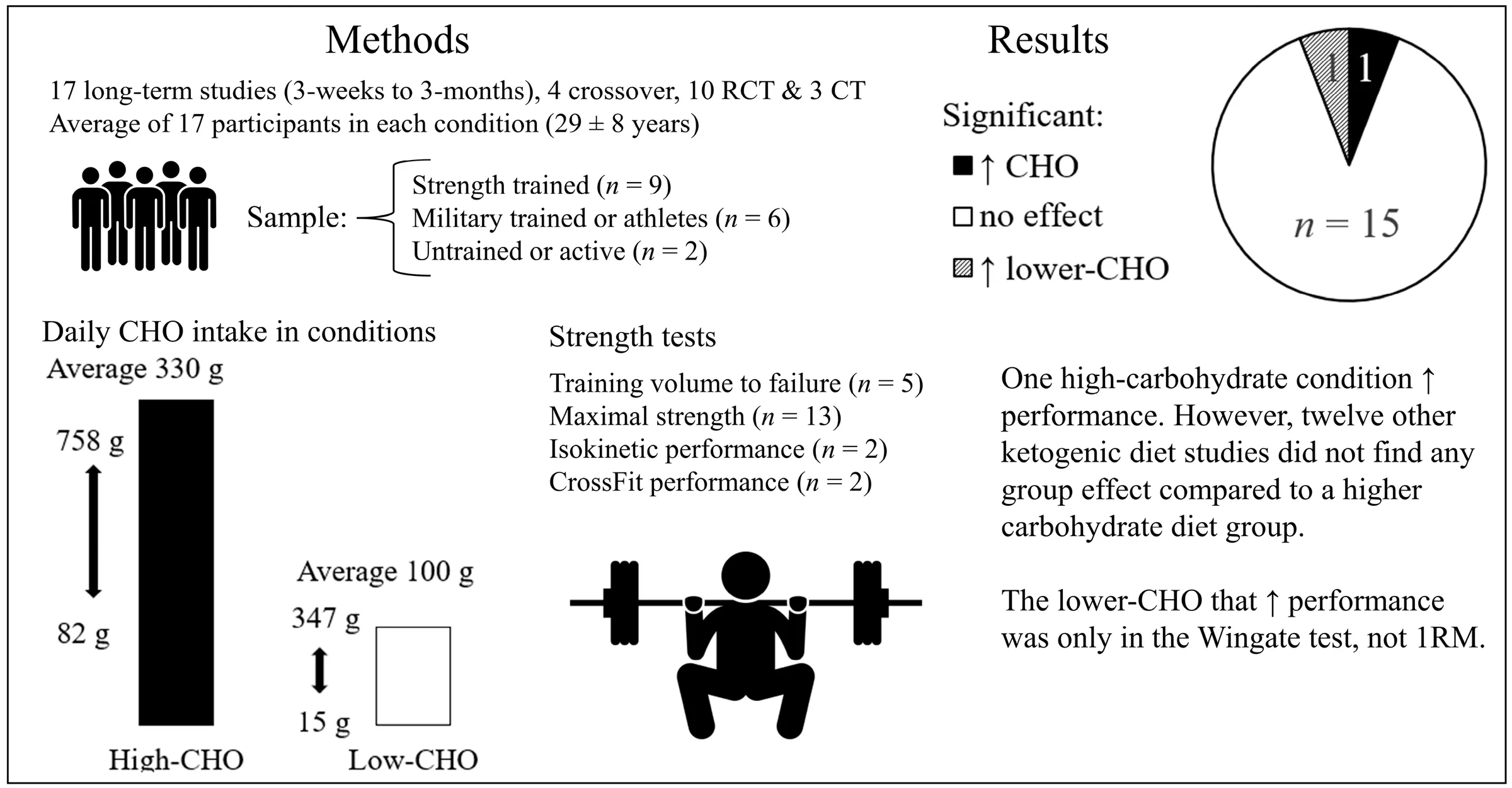
Figure 5 from Henselmans and colleagues (2022), reproduced under CC BY 4.0. The bars on the left are the daily carbohydrate intakes the two conditions averaged.
What this review does not settle
It counts studies; it does not pool them. There is no effect size here and no interval around one, and a vote count weighs a large careful trial the same as a small rough one.
The trials are small. The acute crossovers averaged 11 participants, with a median of nine. Almost every participant in them was a man.
Its subject is strength performance, not muscle growth. Fifteen long-term trials also estimated fat-free mass, and five of those favoured the higher-carb condition — but the authors show those comparisons were confounded by energy intake, and that glycogen and the water stored with it move a fat-free mass reading on their own. One trial reintroduced carbohydrate for a week after ten weeks of keto and fat-free mass rose 4.8%, with no change in the high-carb comparison group.
Nothing ran longer than three months. The authors say strength development may eventually be held back on low carbohydrate if less size is gained over longer periods, which no trial here ran long enough to test. The evidence is also all from adults between 18 and 60.
The 11-sets threshold rests on four acute trials, none of them calorie-matched. It is a signal, not a settled number.
Where this sits in the wider evidence
This study cuts against the standard sports-nutrition recommendation, and the authors say so. The International Society of Sports Nutrition’s 2018 review advises athletes and active people to eat 5–8 g/kg/day of carbohydrate; other recommendations quoted in this paper reach 8–10 g/kg/day for heavy anaerobic training. For an 80 kg lifter, 5 g/kg is 400 g of carbohydrate a day. The long-term trials here got the same strength gains out of arms averaging 100 g.
The review’s explanation for the gap: those recommendations grew out of endurance research and narrative reviews rather than a systematic search of the strength training literature — and this is the only systematic review of the question we could find. Best available answer, not a settled one.
It does not contradict the finding that energy balance matters. Eating too little does cost you lean mass; this review is about which macronutrient supplies those calories, with the total held constant, and on that question it finds nothing.
What to do with this in your training
- Eat something with at least 15 g of carbohydrate and 0.3 g/kg of protein in the three hours before you train. For an 80 kg lifter that is 24 g of protein. That is a snack, not a meal.
- Stop counting the carbohydrate beyond that. Across 49 studies, the total did not move strength once calories were matched.
- Raise it for sessions over 11 sets per muscle group, or when a second hard session hits the same muscles the same day. Between two sessions a few hours apart, the authors go to 1.2 g/kg per hour.
- If you are cutting on low carbohydrate and the scale drops fast in week one, expect some of that to be glycogen and water rather than fat or muscle, and expect it to come back when the carbohydrate does.
- Judge a diet by what the bar does. If your working weights and reps hold across a block, the carbohydrate is not the problem, whatever the number is.
Common Questions About Carbs and Lifting
Does this mean a low-carb diet is better?
No. Of the 17 long-term trials, one favoured higher carbohydrate and one favoured lower — the rest found nothing either way, which is a case for indifference rather than for cutting. The authors add one practical warning in the other direction: a deliberate calorie surplus is harder to hit on a ketogenic diet, possibly because it blunts appetite, and muscle gain does depend on energy balance.
What about training fasted in the morning?
An overnight fast lowers liver glycogen but not muscle glycogen — muscle glycogen is not used to hold up blood sugar. That said, the trials that found a carbohydrate benefit were mostly comparisons against a fast, and the 29-calorie sham breakfast matched the carbohydrate one. Eating something before you train looks worth it; what is in it looks like it matters less.
Do I need carbohydrate after training to recover for tomorrow?
For the next day, the review’s answer is that 24 hours appears to be enough for glycogen to come back even on a low intake — resynthesis rates measured in fasted people would cover the largest depletion they found reported for lifting. The carbohydrate-timing case in this paper is about a second session in the same day, not about tomorrow’s.
Are carbohydrate drinks during a session worth it?
The review’s dose comparisons found no advantage to more of them, and it points at a stranger result: rinsing carbohydrate around the mouth and spitting it out improved reps against a placebo, and any placebo rinse beat plain water. The authors say a full review of that literature is beyond their scope. Take it as a reason not to spend much on intra-workout carbohydrate.
How Pick It Up Helps
The trap in a finding like this is deciding whether a diet is working from the scale alone, which is the one number that moves for water and glycogen reasons that have nothing to do with muscle.
Pick It Up’s nutrition side reads your training log alongside your weigh-ins. You set a goal — cut, maintain, bulk or recomp — weigh in each morning and answer two questions about sleep and hunger, which takes under 30 seconds. The app compares the day against your weekly averages rather than reacting to one reading, and when the scale stalls while your lifts keep climbing it tells you the plan is working instead of prescribing a bigger deficit. It gives a protein floor in grams; there is no macro counting and no calorie counting. Start a free trial.
Further Reading & References
- Henselmans M, Bjørnsen T, Hedderman R, Vårvik FT. The effect of carbohydrate intake on strength and resistance training performance: a systematic review. Nutrients, 2022;14(4):856. PMID 35215506. Open access under CC BY 4.0; the subject of this post and the source of every number above except where noted.
- Kerksick CM, Wilborn CD, Roberts MD, Smith-Ryan A, Kleiner SM, Jäger R, Collins R, Cooke M, Davis JN, Galvan E, Greenwood M, Lowery LM, Wildman R, Antonio J, Kreider RB. ISSN exercise & sports nutrition review update: research & recommendations. Journal of the International Society of Sports Nutrition, 2018;15(1):38. PMID 30068354. Cited for the mainstream carbohydrate recommendation this review argues against.