
Introduction to Breaking Through a Plateau
It happens to everyone pursuing strength training or weightlifting. You’ve been sticking to your program, eating well, sleeping well, managing your stress, and doing everything right… but it doesn’t matter. All of a sudden your progress has stalled.
This is called a plateau, and it’s one of the most frustrating parts of resistance training. It is normal. Common. Frustrating for sure. But it doesn’t actually mean anything is wrong. This stalled progress is a natural part of strength training and development.
This article provides a practical guide to breaking through a weightlifting plateau and getting your progress back on track using science-backed strategies.
You’ll learn how to identify what’s causing your plateau, whether it’s programming issues, weak point muscles, or recovery problems—and exactly what to do about it.
Table of Contents
- What Causes a Strength Training Plateau
- How to Identify What is Causing Your Plateau
- Breaking Through Plateaus by Lift Type
- Quick Reference: Breaking Through Plateaus
- Common Questions About Training Plateaus
- How Pick It Up Helps You Break Through Plateaus
- Further Reading & References
- Conclusion
What Causes a Strength Training Plateau
A plateau is caused by one of two simple things:
- Your body is not recovering well enough.
- A specific muscle is too weak at the weakest part of the lift, stopping you from progressing. (See our exercise anatomy article.)
Thus, to break through this training stall, you must identify which one of the two causes is happening, and address it.
How to Identify What is Causing Your Plateau
Here is a simple checklist to identify what is causing your strength training plateau:
Linear Progression & Periodization
Linear Progression
This is a fancy word for a simple concept. Linear progression means adding a little bit more weight – or doing a couple more reps – each time you do an exercise. Said another way, if every time you squat you do 10 reps with 50 pounds, at some point your legs will stop getting stronger. You must continue to challenge them in greater ways, causing a large enough stimulus to tell your body to grow more muscle.
Many programs don’t incorporate linear progression at all. More commonly, linear progression is included, but that’s it. And linear progression on its own is not enough to keep you progressing. This is likely why you’re here: at some point you can’t just keep adding weight or reps. That stops working. So what do you do then? That’s where periodization comes in.
Periodicity & Periodization
Periodization is also a fancy word for a simple concept. Periodization, also sometimes called periodicity, means varying the intensity and reps you lift during each workout. For example, sometimes you might lift 85% of your maximum but only do 5 reps. Other times you might lift at only 75% of your maximum, but do 10 reps. In short, don’t just do the exact same thing over and over and keep trying to add more weight or more reps. Sometimes increase the weight but subtract reps, and other times decrease the weight but add reps. That’s it.
Research demonstrates that periodized training produces superior strength gains compared to non-periodized programming. A 2017 meta-analysis by Williams and colleagues found that periodized training produces significantly larger strength gains (effect size = 0.43), with undulating programs being particularly effective for breaking through strength stagnation.
You don’t need to overthink it. Pick It Up will do all this for you. Sign up today!
Target Specific Limiting Muscles
If you’ve already introduced linear progression with periodization to your workout routine or program, then you may have a muscle weakness or technique issue.
Going back to our exercise anatomy article discussion of your muscles working together like a chain, you don’t fail a lift or hit a wall because “you’re too weak”. You fail a lift because one specific muscle is too weak during the hardest part of the lift. To break through this barrier, you may need to identify this muscle, and specifically target it.
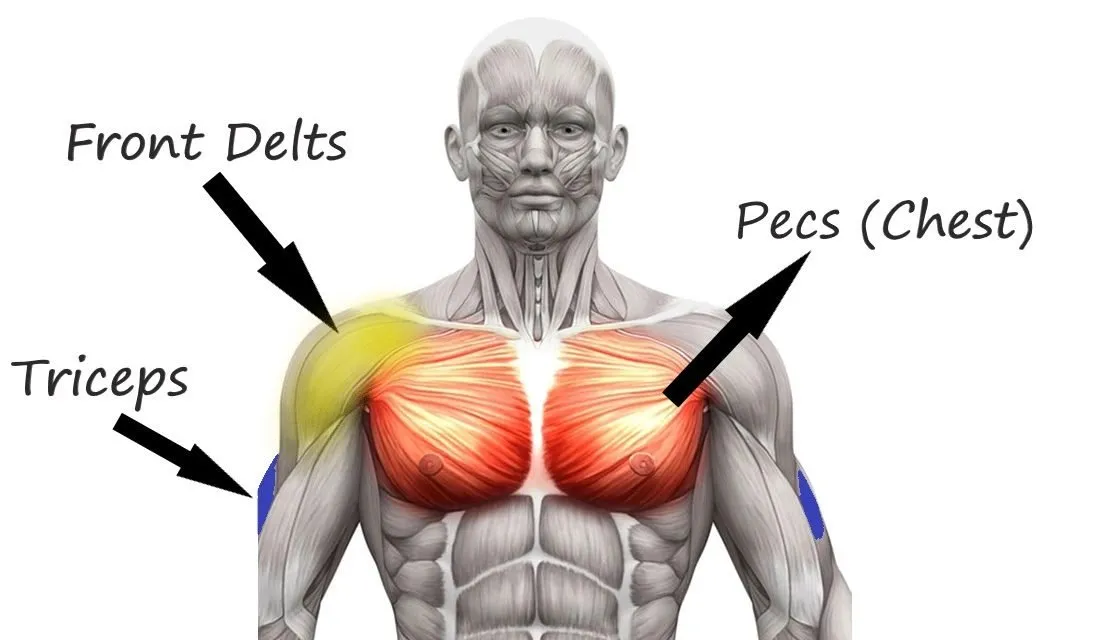
How to do this is specific for each exercise. For example, if your bench press has stalled, if you’re struggling to get the bar off your chest it likely means your pecs (chest muscles) need extra targeting. If you’re struggling to lock out at the top, however, that means it’s more likely your triceps (arms) that are holding you back.
We’ll cover specific weak point exercises for each lift below in the Breaking Through Plateaus by Lift Type section.
Recovery Optimization
Deload Weeks
This one’s simple. Even with a good linear progression system with periodization, you can’t just keep increasing weight forever. You need to take a deload week and give your body time to recovery.
Deloads are underrated. You don’t build strength while lifting. You build strength while recovering.
Research on deloading practices shows that most strength athletes deload every 5-6 weeks, with the typical deload lasting about 6 days. The primary benefits include fatigue management, enhanced recovery, and improved preparedness for subsequent training cycles. Coaches agree that deloading reduces the risk of overtraining, training monotony, and training-related injury.
Here’s a simple way to program in deload weeks: if you’ve been working out consistently for a month, give yourself a week to do your same program, but cut all the weights in half. It’ll feel easy, give you time to recover, and let you keep all your habits and rituals. Then get back to your regular program the next week. Enjoy your newfound gains!
Eating for Your Goals
Are you eating enough? If you are intentionally losing weight while lifting that’s great. That’s called “a cut”. At some point during a cut, it stops being possible to continue gaining strength. You must then choose if you want to continue the cut and maintain strength, or if you want to go into “maintenance mode” and stop losing weight but continue gaining strength. Or start a bulk. Again, whatever you choose is fine, but it’s difficult to have it both ways. Gaining strength while cutting is only available to beginning strength trainees.
Sleep Optimization
Are you sleeping enough? Everyone’s body is different, but the large majority of people need between 7-9 hours of sleep per night.
Research on sleep and muscle recovery demonstrates that during deep sleep, muscle repair and protein synthesis intensify, while energy stores including muscle glycogen are replenished. Sleep deprivation weakens muscle recovery by increasing protein breakdown and decreasing growth hormone and testosterone concentrations, thereby limiting protein synthesis and muscle recovery capacity.
If you’re not getting at least 7 hours of sleep each night, then you need to have a frank conversation with yourself about your priorities. Whatever you choose is fine, but if you’ve already hit a wall and you’re not getting enough sleep then you cannot continue to both get less than 7 hours of sleep per night and also continue to gain strength. You must pick.
If it is not possible for you to rearrange your life right now so you can get more sleep, that’s fine. We’ll still be here when you get back. Take the time you need for yourself. Lifting should be fun, not a burden. We’ll be right here when you’re ready!
Stress Management
This one often shows up in sleep: you get to bed at a reasonable hour, but it takes a long time to fall asleep, or you don’t sleep through the night. Your body only has so many reserves, and stress and strength both pull from the same place: you. If I could write a blog post that would magically take away all your stress, believe me I would. I can’t. Here’s a couple tips that might help, that you’ve probably already heard, but that have helped me immensely:
Journal. For whatever reason, naming things and writing them down reduces my stress immensely. If you’re a self-described meathead reading this, let me assure you journaling isn’t “just for girls”. I deadlift 484 pounds and qualified for nationals in Powerlifting. Journaling is awesome. You don’t need to be fancy about it. Just write down whatever’s on your mind or keeping you up or going through your head. You can burn it if you want to. You don’t need to write full sentences. Just get it out of your head and onto paper and see if it helps.
Exercise. You’ve come to the right place for this one! Picking heavy things up and putting them back down is awesome for stress relief. If you’re stuck because of stress, don’t worry about those sweet, sweet gainz. Just pick heavy stuff up and put it back down. You’ll break through eventually.
Prioritize Seeing Friends. Yes I know this is generic too, but a lot of people I know – and especially guys – neglect this. If you’re not seeing friends at least once a week, this might be more of an issue for you than you realize. You’re on a screen right now. Great. Use it to text or email some people and see if they want to go for a walk or grab a meal or… wait for it… go to the gym with you! Friends are great. Text them. Pick heavy things up and put them back down with them.
Stress management is obviously a large topic and we’re not going to solve it here. If this is what’s holding you back, then just know I’m sending empathy your way. This was a large issue for me for years. It’s tough. Hang in there. This too shall pass.
Breaking Through Plateaus by Lift Type
Understanding where you fail during a lift helps identify which specific muscle is your weak link. Here’s how to break through plateaus for the three main lifts:
Breaking Through Bench Press Plateaus
Weak Off Chest (Bottom of Movement)
- Limiting muscle: Pectorals (chest)
- Accessory exercises: Dumbbell flyes, cable crossovers, wide-grip bench press variations, incline bench press
- Programming: Add 2-3 sets of 8-12 reps after your main bench work
Weak at Lockout (Top of Movement)
- Limiting muscle: Triceps
- Accessory exercises: Close-grip bench press, dips, tricep extensions (skullcrushers), overhead tricep extensions
- Programming: Add 2-3 sets of 6-10 reps focusing on tricep isolation
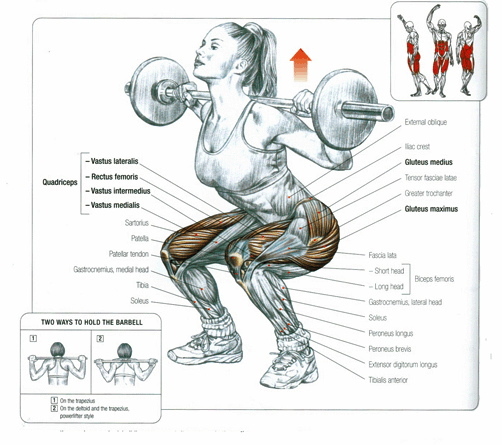
Overcoming Squat Plateaus
Weak Out of the Hole (Bottom Position)
- Limiting muscle: Quadriceps
- Accessory exercises: Front squats, leg extensions, pause squats (3-second pause at bottom), Bulgarian split squats
- Programming: Add 3-4 sets of 8-12 reps after main squat work
Forward Lean or Weak Lockout (Top of Movement)
- Limiting muscle: Glutes and lower back
- Accessory exercises: Romanian deadlifts, hip thrusts, good mornings, back extensions
- Programming: Add 2-3 sets of 8-12 reps focusing on posterior chain
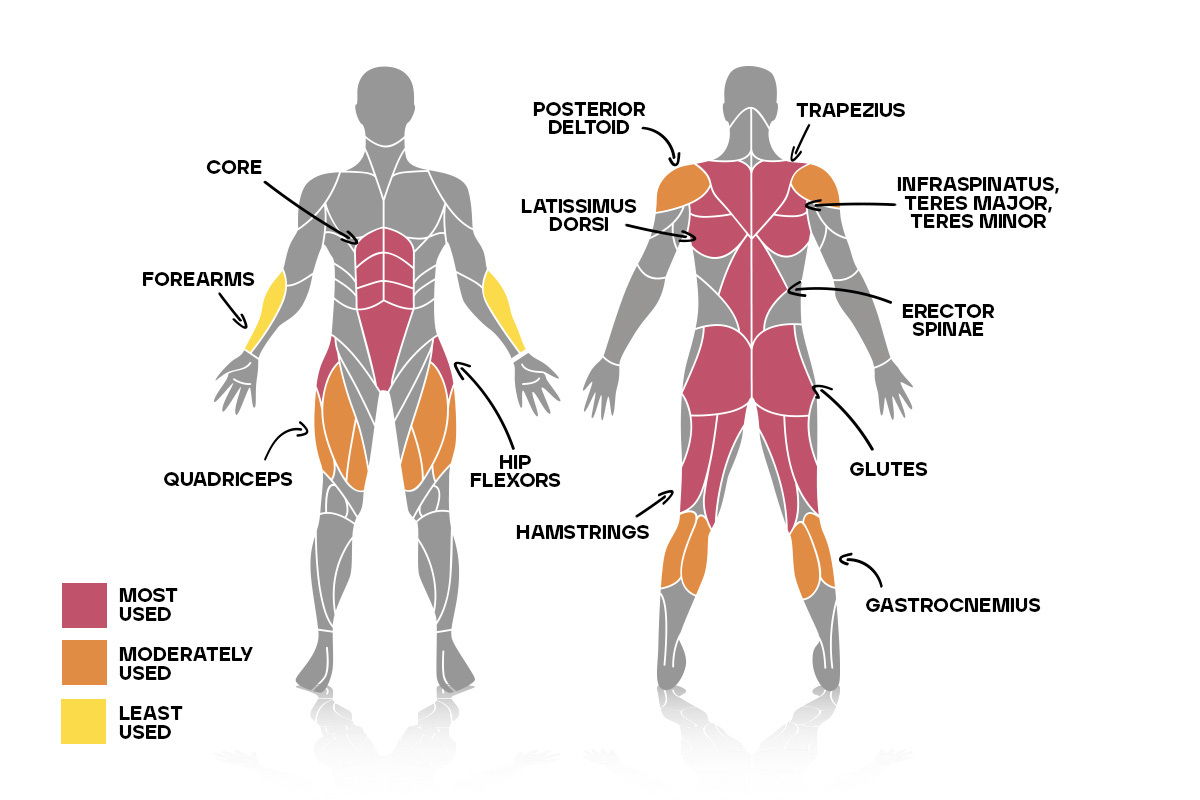
Defeating Deadlift Plateaus
Can’t Break Floor (Initial Pull)
- Limiting muscle: Quadriceps and glutes
- Accessory exercises: Deficit deadlifts, box squats, paused deadlifts (pause 1” off floor), leg press
- Programming: Add 2-3 sets of 3-6 reps at moderate weight
Can’t Lockout (Top of Movement)
- Limiting muscle: Hamstrings, glutes, and lower back
- Accessory exercises: Romanian deadlifts, glute-ham raises, rack pulls (above knee), single-leg Romanian deadlifts
- Programming: Add 2-3 sets of 6-10 reps focusing on hip extension
Quick Reference: Breaking Through Plateaus
Plateau Symptoms:
- ✓ Can’t add weight for 2+ consecutive sessions
- ✓ Can’t complete target reps at same weight
- ✓ Feeling unusually fatigued or unmotivated
First Steps:
- Assess recovery (sleep 7-9 hrs, adequate calories, stress management)
- Check if your program includes periodization
- Identify weak point in the lift
Quick Fixes by Cause:
- No periodization → Add wave periodization or use Pick It Up
- Weak muscle → Add 2-3 sets of accessory work targeting weak point
- Poor recovery → Schedule deload week (50% volume or weight)
- Nutrition → Ensure eating at maintenance or surplus for strength gains
When to Use Each Solution:
- Deload: After 4-6 weeks of consistent training
- Accessory work: When failing at same point in lift repeatedly
- Periodization: Should always be part of your program
Common Questions About Training Plateaus
What is a strength training plateau?
A strength training plateau occurs when you can no longer add weight or reps to your lifts despite consistent training. It’s caused by either inadequate recovery or a specific weak muscle limiting your progress.
How long does a plateau last?
A plateau can last weeks or months if not addressed. With proper intervention (periodization, deload, or weak point training), most lifters break through within 1-4 weeks.
Should I deload during a plateau?
Yes, if you’ve been training consistently for 4-6 weeks without a break. A deload week (50% volume or weight) allows accumulated fatigue to dissipate and often leads to immediate strength gains afterward.
Can I gain strength while cutting weight?
Beginning lifters can, but intermediate and advanced lifters typically can’t gain significant strength while in a caloric deficit. You’ll need to choose between continued fat loss (maintenance strength) or gaining strength (maintenance calories or surplus).
How often should I change my program to avoid plateaus?
You shouldn’t frequently change programs - that prevents adaptation. Instead, use periodization within the same program (varying intensity and volume each week) and take deload weeks every 4-6 weeks.
What’s the difference between a plateau and overtraining?
A plateau means progress has stalled. Overtraining includes additional symptoms: persistent fatigue, decreased motivation, elevated resting heart rate, poor sleep, and increased injury risk. Most “overtraining” is actually under-recovery.
How Pick It Up Automatically Prevents and Breaks Through Plateaus
Manually implementing periodization, tracking deloads, and identifying weak points is complex. Pick It Up handles all of this automatically:
Built-In Wave Periodization
Pick It Up uses wave periodization by default, automatically varying intensity and volume each week to prevent plateaus before they happen. The app cycles through strength, hypertrophy, and deload phases without you needing to program anything.
For example, a typical 4-week block might look like:
- Week 1: 10 reps at 70% (hypertrophy focus)
- Week 2: 8 reps at 75% (volume focus)
- Week 3: 6 reps at 80% (strength focus)
- Week 4: 10 reps at 60% (deload)
This variation ensures continuous adaptation while managing fatigue - the key to avoiding plateaus.
Automatic Deload Scheduling
At the end of each 4-week block, Pick It Up evaluates your performance across all lifts, updates your 1RMs, and programs your next block with appropriate deload weeks built in. You never have to guess when you need a break.
Intelligent Progressive Overload
The app doesn’t just tell you to “add 5 pounds.” It analyzes your actual performance (weight, reps, RPE) and provides intelligent targets for your next set, adjusting in real-time based on how you’re performing today. It also does a thorough evaluation of every set at the end of each monthly block. This implements progressive overload intelligently, adapting to your recovery status.
Recovery-Aware Programming
Pick It Up asks about your equipment access and training goals, then creates monthly programming blocks that balance volume, intensity, and recovery to maximize strength gains while preventing overtraining.
Ready to break through your plateau? Start your free trial and let Pick It Up handle the complex programming while you focus on lifting.
Further Reading & References
For those wanting to dive deeper into the science of breaking through plateaus, here are authoritative sources:
-
Comparison of Periodized and Non-Periodized Resistance Training on Maximal Strength: A Meta-Analysis - Williams et al., 2017, Sports Medicine - Meta-analysis showing periodized training produces superior strength gains (ES = 0.43) compared to non-periodized programming, with undulating programs being particularly effective
-
Deloading Practices in Strength and Physique Sports: A Cross-sectional Survey - Bell et al., 2024, Sports Medicine - Research demonstrating that most athletes deload every 5.6 ± 2.3 weeks for optimal fatigue management and injury prevention
-
Progressive Overload Without Progressing Load? The Effects of Load or Repetition Progression on Muscular Adaptations - Plotkin et al., 2022 - Study demonstrating that both load and repetition progression are effective strategies for breaking through strength plateaus
-
Sleep and Muscle Recovery: Endocrinological and Molecular Basis for a New and Promising Hypothesis - Dattilo et al., 2011, Medical Hypotheses - Study examining the relationship between sleep quality, growth hormone secretion, and athletic performance recovery
-
The Impact of Pre-sleep Protein Ingestion on the Skeletal Muscle Adaptive Response to Exercise in Humans: An Update - Snijders et al., 2019, Frontiers in Nutrition - Research showing muscle protein synthesis rates were ~22% higher during sleep when protein was consumed beforehand
-
Effects of Periodization on Strength and Muscle Hypertrophy in Volume-Equated Resistance Training Programs: A Systematic Review and Meta-analysis - Moesgaard et al., 2022 - Recent meta-analysis confirming the benefits of periodized training for strength development
Conclusion: Breaking Through Plateaus
Plateaus and getting stuck are a natural part of strength training. Knowledge and action to break through plateaus, however, separates those who continue to gain strength and achieve their goals vs those who stay stuck.
This article is intended to help you identify what’s causing your plateau, and equip you to break through it.
The most common causes are:
- No linear progression with periodization in your program
- A specific muscle or technique issue holding you back
- Not enough recovery. Remember, you don’t build muscle in the gym, your body builds strength during recovery.
You don’t have to go it alone or try to figure this all out for yourself. Sign up now and for $5 per month Pick It Up will handle all this for you. Ready to break through your plateau? Start your free trial today!
Sources:
- Comparison of Periodized and Non-Periodized Resistance Training on Maximal Strength: A Meta-Analysis
- Deloading Practices in Strength and Physique Sports: A Cross-sectional Survey
- Progressive Overload Without Progressing Load? The Effects of Load or Repetition Progression on Muscular Adaptations
- Sleep and Muscle Recovery: Endocrinological and Molecular Basis for a New and Promising Hypothesis
- The Impact of Pre-sleep Protein Ingestion on the Skeletal Muscle Adaptive Response to Exercise in Humans: An Update
- Effects of Periodization on Strength and Muscle Hypertrophy in Volume-Equated Resistance Training Programs